Become a Full Stack Web Developer
Ship full web apps — frontend, backend, and everything in between.
Full stack developers own a feature from database schema to pixel-perfect UI. This accelerator stitches Learnfly’s strongest web courses into a progression that takes you from your first HTML page to a deployed React + Node application talking to a real Postgres database — the exact stack hiring managers screen for in 2026.
The skill set, broken down
Curated from the top-rated Learnfly courses in this domain.
What hiring managers actually screen for
HTML & CSS
Modern layout with grid, flexbox, and accessibility-first markup.
JavaScript / TypeScript
Async, modules, types, and the JS that actually runs in 2026.
React
Components, hooks, suspense, and routing patterns that stay maintainable.
Node & APIs
Express, REST, GraphQL, and serverless functions.
Databases
SQL, Postgres, Prisma — design schemas that don’t paint you into a corner.
DevOps Basics
Git, CI, Vercel / AWS deploys, and reading logs when prod breaks.
Top Learnfly courses for Full Stack Web Developers
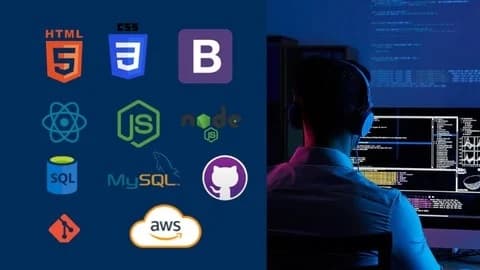
Real, published courses from Learnfly’s catalog — sorted by enrollments and rating.













The path, in order
Suggested sequence — skip ahead if you already know the basics.
- 1HTML, CSS, and responsive layout fundamentals
- 2JavaScript and TypeScript essentials
- 3Frontend with React and modern tooling
- 4Backend with Node.js and API design
- 5Databases, ORMs, and data modeling
- 6Authentication, deployment, and CI/CD
- 7Capstone: build and ship a full-stack project
A certificate hiring managers actually verify
Finish a course in the accelerator and get a shareable certificate of completion. Pin it on LinkedIn, drop it on your résumé, send the verify link to a recruiter.
Real people, real outcomes
“The accelerator gave me a path I could actually follow after work hours. Eight months in, I was hired as a junior on a real product team.”
“I was drowning in YouTube tutorials before this. Having a single curated track from Learnfly cut the noise and got me building.”
“The projects in the accelerator are what got me past the résumé screen. Recruiters reached out instead of the other way around.”
Common questions about becoming a Full Stack Web Developer
No. Most working full stack developers learned through courses and projects. What hiring managers actually screen for is a portfolio of deployed apps and the ability to talk through your code.
JavaScript / TypeScript with React on the frontend and Node on the backend covers the largest job market today. You can always branch into Python, Go, or Rust later.
Most learners reach junior-developer readiness in 4–7 months of consistent study and 2–3 real projects. Faster if you already know basic programming.
Yes — and you should. By the end of the accelerator you’ll have shipped at least one full-stack app from idea to deployed URL.
Ready to start your Full Stack Web Developer journey?
One subscription. The whole accelerator. Cancel anytime.